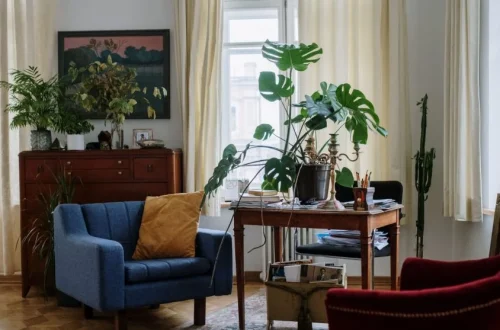

Some rooms feel perfectly fine when you first walk into them.
Then, after spending some time there, something starts to feel different.
You become a little tired. Your concentration slips. You feel slightly uncomfortable, even though you can’t pinpoint why. Sometimes, you may find yourself leaving the room sooner than you intended.
This isn’t just your imagination.
Many spaces quietly drain energy, and the reason is often hidden within the details of their design.
Too Much Visual Noise
When a room is filled with too many things competing for your attention, your brain has to work harder than it should.
Different colors, patterns, decorative items, and shapes all require mental processing.
Over time, this creates a subtle sense of fatigue.
Rather than helping you unwind, the room keeps your mind busy in the background.

Lighting That Feels “Off”
Lighting has a powerful influence on how a space feels.
A room that is too dark can feel heavy and draining. One that is overly bright may feel harsh and uncomfortable. Uneven lighting can also create a sense of imbalance.
Your body responds to these conditions almost immediately, even if you are not consciously aware of it.
That response often appears as discomfort, restlessness, or reduced energy.
Furniture That Doesn’t Invite Use
Some rooms appear complete and well-designed, yet they never feel comfortable.
The chairs may be slightly awkward. Tables may be positioned in inconvenient places. Seating may not support natural posture.
As a result, you never fully settle into the space.
Instead of relaxing, you remain subtly alert and engaged.
Unclear Purpose
Rooms without a clearly defined function often feel surprisingly unsettling.
Are they meant for working, relaxing, or socializing?
When a room does not communicate its purpose, your brain must decide how to use it every time you enter.
Although this effort seems small, those repeated decisions can gradually become mentally draining.

Blocked or Awkward Movement
Moving through a room should feel natural and effortless.
When you have to think about where to step or how to navigate around furniture, it interrupts that flow.
Even minor obstacles, such as a narrow pathway or a poorly placed table, create friction.
That friction keeps your body slightly tense.
Over time, the tension can turn into a feeling of fatigue.
Lack of Visual Rest
Every room benefits from having areas where the eyes can pause and relax.
Without those moments of visual relief, a space can feel overwhelming, even when it is not actually cluttered.
Simple surfaces, open areas, and calmer sections of a room help create balance.
Without them, your attention remains constantly engaged and never fully settles.
Temperature and Material Signals
The materials used in a room play a significant role in how it feels.
An abundance of hard surfaces can make a space seem cold and unwelcoming. On the other hand, too many heavy materials can make it feel dense and oppressive.
Your body responds to these signals on a subconscious level.
Comfort usually comes from balance rather than extremes.
Why You Don’t Notice It Right Away
These design issues rarely create immediate discomfort.
Instead, they build gradually.
At first, the room feels normal. As time passes, however, your energy begins to fade, your focus weakens, and the space becomes less enjoyable to spend time in.
Because the effect develops slowly, it is often easy to overlook.
What Comfortable Rooms Do Differently
Comfortable rooms do not constantly demand your attention.
Instead, they support a sense of ease through:
- Smooth, natural movement
- A clear sense of purpose
- Balanced lighting
- A calm visual environment
Most of the time, you don’t consciously notice these qualities.
You simply feel comfortable being there.
Frequently Asked Questions
Q: Why do some rooms make me feel tired?
A: Because of lighting, layout, clutter, and design imbalance.
Q: Can decor affect mood?
A: Yes, it directly influences comfort and energy levels.
Q: Is clutter the only problem?
A: No, layout, lighting, and purpose also matter.
Q: Can small changes fix this?
A: Yes, even minor adjustments can improve how a room feels.
Key Takeaway
Rooms that leave you feeling drained are often affected by subtle design imbalances rather than one obvious problem. Improving elements such as layout, lighting, movement, and visual clarity can make a space feel noticeably more comfortable and inviting without requiring major renovations.