You move the sofa.
Then you reposition the coffee table.
A few days later, the chair gets moved again.
Eventually, it feels like every piece of furniture has been rearranged at least once, yet the room still doesn’t feel quite right.
It’s one of the most frustrating challenges in home design because no matter how much effort you put in, the problem seems to remain.
The reason is that layout issues are rarely caused by furniture placement alone.
The Room Lacks a Clear Center
Every successful room has a natural center—a point that helps organize everything around it.
Without that anchor, furniture can feel disconnected, as though each piece exists independently rather than as part of a larger arrangement.
As a result, you keep shifting items around, hoping to discover the perfect setup.
But when a room has no clear center, nothing ever feels fully settled.
Competing Movement Paths
Many rooms contain more than one route for moving through the space.
That’s not necessarily a problem.
The issue arises when those pathways overlap, compete, or interrupt one another.
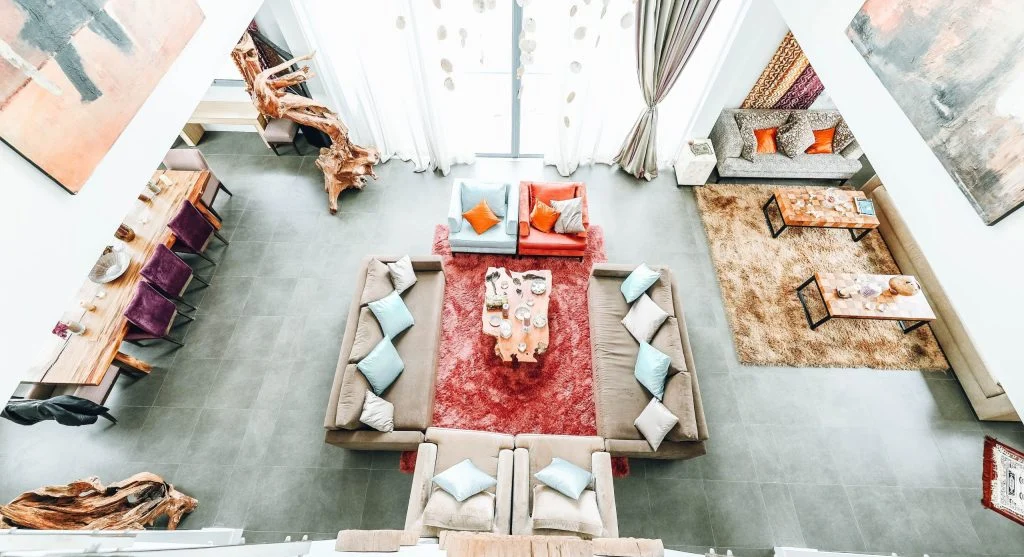
When movement patterns are unclear, navigating the room begins to feel less natural.
Your body instinctively searches for the easiest path, but when several routes compete for attention, every movement can feel slightly awkward.
Furniture Is Arranged Around Walls Instead of People
A common design habit is placing furniture according to the room’s boundaries rather than how the room is actually used.
This often results in large empty spaces in the middle and seating arrangements that feel disconnected.
The room may appear organized, but it does not necessarily support comfortable interaction.
The most effective layouts are shaped by behavior and daily activities—not simply by the location of the walls.
Distances Feel Slightly Wrong
Comfort often depends on details that seem minor.
The distance between furniture pieces can significantly affect how a room feels.
For example:
- Too close can make the room feel cramped
- Too far can make it feel disconnected
Even small spacing issues can create discomfort.
Your brain continues trying to make sense of the arrangement, but it never quite reaches a feeling of balance.
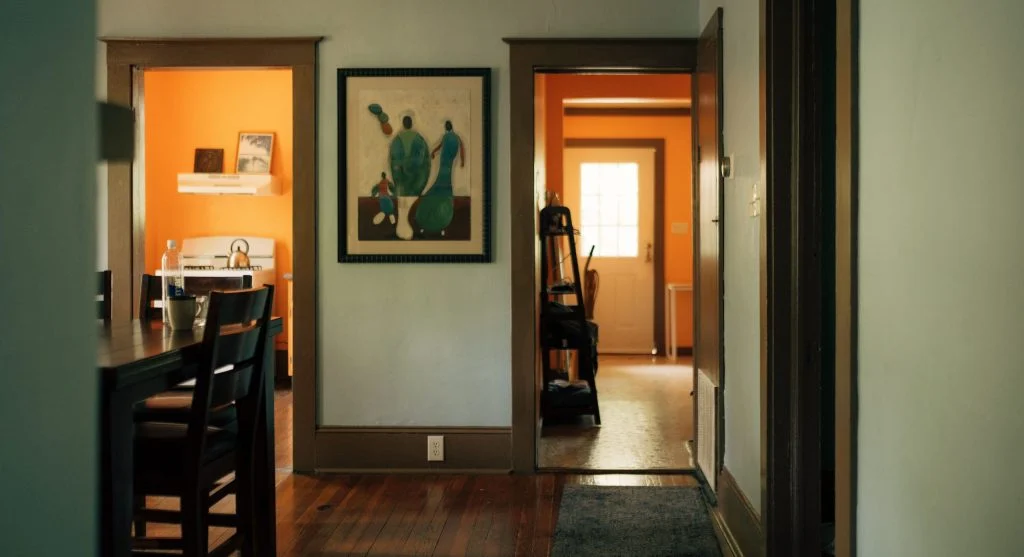
Objects Don’t Relate to One Another
A room feels more natural when its elements visually and functionally connect.
Seating areas, tables, and focal points should feel as though they belong to the same conversation.
When furniture faces away from one another or lacks a clear relationship, the space can feel fragmented.
This often creates a subtle sense of separation and isolation within the room.
Too Many Functions in One Space
Modern homes often require rooms to serve multiple purposes.
A single room may act as a workspace, dining area, and relaxation zone all at once.
The challenge occurs when these functions exist without any structure or definition.
For example:
- Working
- Relaxing
- Dining
All happening in the same area without clear boundaries.
Rather than feeling flexible, the room begins to feel confusing and unstable.
Uneven Visual Weight
Sometimes a layout feels wrong even when everything appears to be in the right place.
The issue may be visual weight.
One side of the room might contain larger furniture, stronger colors, or more decorative elements than the other.
This imbalance subtly pulls attention in a single direction.
The room can feel uneven or tilted, even though nothing is physically out of place.
Why Rearranging Often Fails
Many people respond to discomfort by rearranging furniture repeatedly.
The problem is that rearranging only addresses the visible symptoms.
If the room lacks clear flow, balance, movement patterns, or a central structure, moving furniture alone will not solve the issue.
Instead, the discomfort simply shifts from one arrangement to the next.
What a Well-Planned Layout Feels Like
A successful layout rarely draws attention to itself.
In fact, the best layouts often go unnoticed because they feel effortless.
You:
- Move naturally through the space
- Sit comfortably without constant adjustment
- Instantly understand how the room works
The layout fades into the background.
And that is usually the sign that it is working properly.
Frequently Asked Questions
Q: Why does my layout feel wrong even after rearranging?
A: Because the issue is often structural, not just placement.
Q: What makes a layout feel right?
A: Clear flow, balance, and connection between elements.
Q: Can small spacing changes help?
A: Yes, even slight adjustments can improve comfort.
Q: Should furniture always go against walls?
A: No, layouts should follow how the space is used.
Key Takeaway
When a home layout never feels quite right, the issue is usually deeper than furniture placement. A successful room relies on clear structure, natural movement, visual balance, and strong connections between elements. Once those pieces work together, the space feels comfortable without the need for constant rearranging.