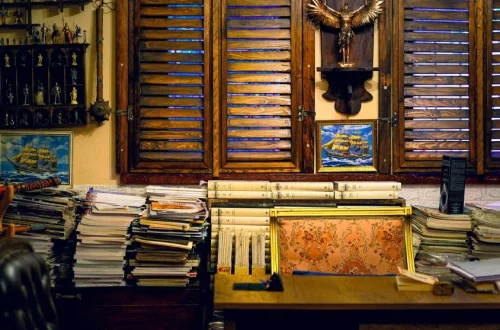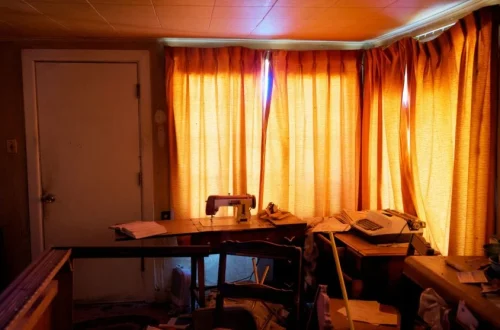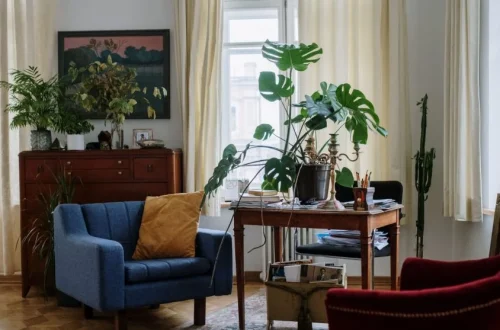
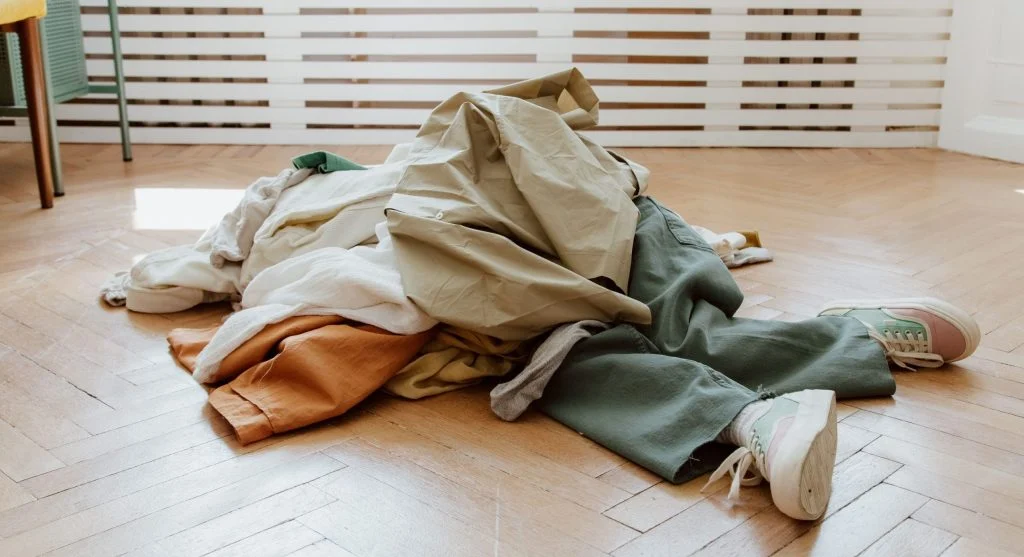
You cleaned every surface.
Everything is organized. Items are neatly arranged. Nothing appears out of place.
Yet the room still feels chaotic.
This is one of the most misunderstood challenges in home design because the problem is not necessarily mess. A space can be tidy, organized, and well-maintained while still creating a sense of mental overwhelm.
That is because chaos is not always about clutter.
More often, it is about how the brain interprets and processes the environment.
Too Many Elements Competing for Attention
Even organized objects can create visual competition.
Different shapes, colors, textures, and materials all ask for attention at the same time.
As your eyes move around the room, your brain constantly shifts focus from one element to another.
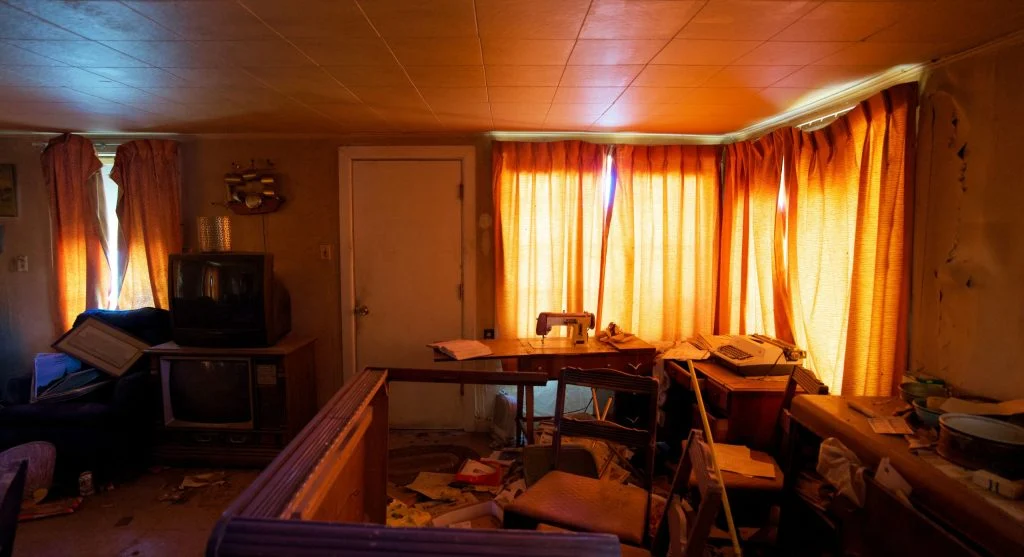
The result is a feeling of visual busyness that can easily be mistaken for clutter, even when everything is neatly arranged.
No Clear Visual Hierarchy
Comfortable spaces tend to guide attention naturally.
There is usually a clear order to what you notice:
- A primary focal point
- Supporting elements
- Background details
In a visually chaotic room, that order disappears.
Everything seems equally important.
Without a clear hierarchy, the brain struggles to determine where attention should settle, creating a feeling of overload.
Inconsistent Design Language
A room feels more cohesive when its elements relate to one another.
When styles, colors, materials, and shapes feel disconnected, the space can lose its sense of unity.
This does not mean everything must match perfectly.
However, when too many unrelated design choices exist in the same room, the overall environment can feel fragmented.
The brain interprets that lack of connection as subtle disorder, even when every item is properly organized.
Movement Without Direction
Visual movement matters just as much as physical movement.
When the eye can travel smoothly through a room, the space feels calm and understandable.
When attention constantly jumps from one area to another without a clear path, the room can feel unsettled.
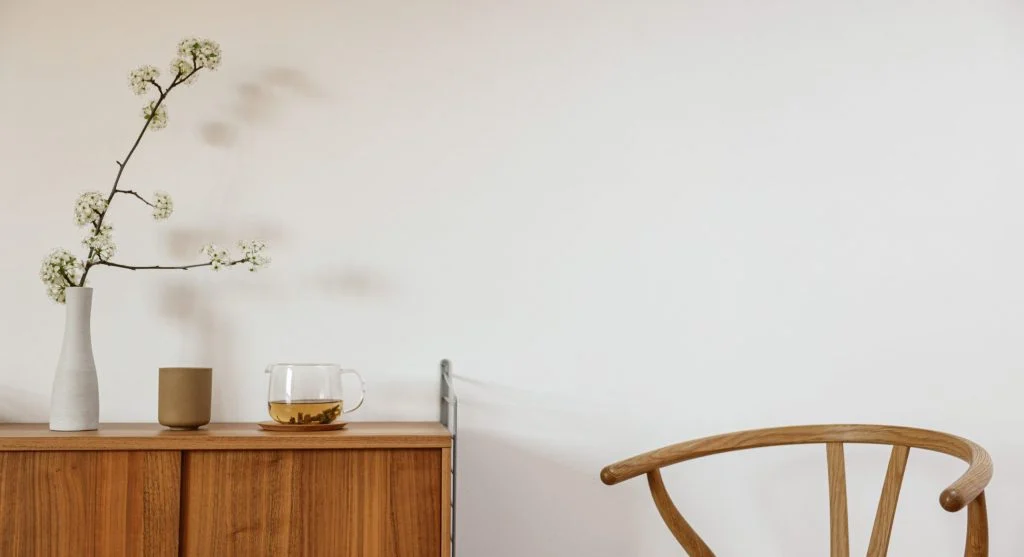
Instead of experiencing the space as a whole, the brain processes it as a series of competing elements.
This creates a sense of instability that contributes to the feeling of chaos.
Too Many Small Elements
Many small decorative pieces often create more visual complexity than a few larger ones.
Even when neatly arranged, numerous small objects require individual attention.
The brain must process each item separately.
As the number of elements increases, so does the amount of information the room demands.
This is why a space filled with many small accessories can feel busier than a room with fewer, more substantial pieces.
The Importance of Grouping
Objects generally feel calmer when they are organized into groups.
Grouping helps the brain interpret multiple items as a single visual unit rather than several separate elements.
When objects are scattered individually throughout a room, visual noise increases.
When they are arranged intentionally, complexity decreases.
This simple principle often makes a space feel more organized without removing a single item.
Active Backgrounds Create Competition
Large surfaces such as walls, floors, and rugs serve as the backdrop for everything else in a room.
When those backgrounds contain strong patterns, bold textures, or multiple competing colors, they begin competing with furniture and decor for attention.
This weakens visual stability.
A calmer background allows other elements to stand out more clearly while creating a stronger sense of balance throughout the space.
Why Organization Alone Does Not Solve Chaos
Organization addresses where things are placed.
Chaos is often a matter of perception.
A room can be perfectly organized while still overwhelming the senses if too many visual demands exist at the same time.
This is why tidying up does not always solve the feeling.
The issue may not be placement at all—it may be the way information is presented visually.
What Calm Spaces Do Differently
Calm spaces make the environment easier to understand.
Rather than competing for attention, the elements work together.
These spaces tend to:
- Guide attention naturally
- Reduce unnecessary visual competition
- Create a clear sense of structure
- Limit the number of decisions the eye must make
As a result, the brain spends less effort processing the room and more time relaxing within it.
Frequently Asked Questions
Q: Why does my home feel chaotic even when clean?
A: Because of visual overload and lack of structure.
Q: Is clutter the main cause?
A: Not always — organized spaces can still feel chaotic.
Q: How can I reduce chaos?
A: By simplifying elements and improving visual hierarchy.
Q: Does grouping help?
A: Yes, it reduces visual complexity.
Key Takeaway
A home that feels chaotic is not always messy. Often, the real issue is visual overload rather than physical clutter. When attention is guided clearly, elements work together, and visual competition is reduced, a space becomes easier to process and far more relaxing to live in. Small changes in hierarchy, grouping, and visual structure can transform a room from overwhelming to calm without removing everything that makes it feel personal.